

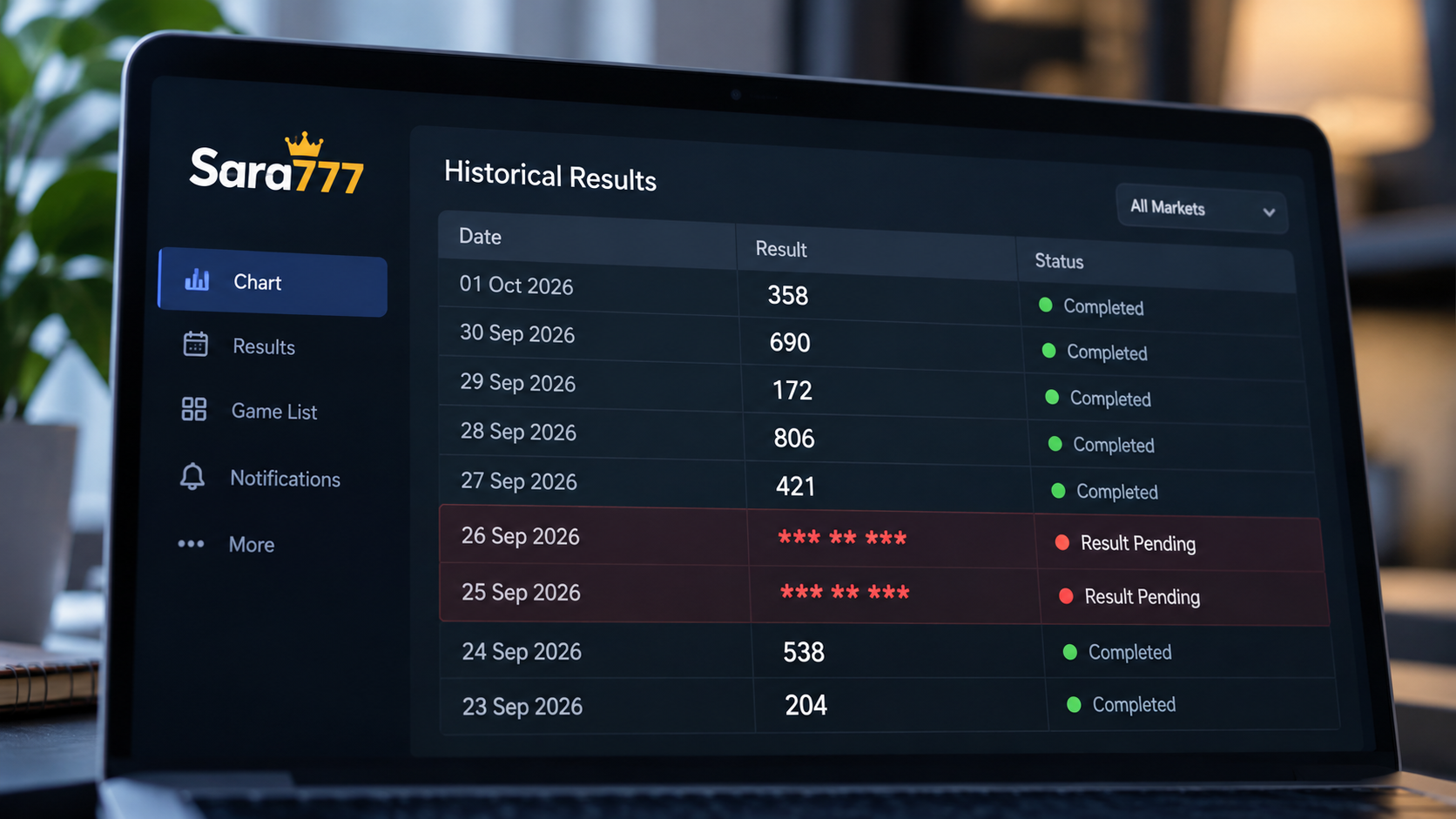
In high-velocity data transmission—whether covering financial exchange tickers, sports scores, or numbers declarations—occasional reporting errors are inevitable. A scraper may misparse a character, an upstream source may publish an erroneous digit before issuing a hurried retraction, or an operator may accidentally invert two numbers during live transcription. The true measure of a platform’s institutional reliability is not the absolute absence of errors, but the transparency with which corrections are handled. When an erroneous entry is published and later updated, a results website must never silently overwrite the record; it must provide an unalterable, publicly visible audit trail.
Across informal Matka channels, the practice of the “silent overwrite”—quietly replacing an incorrect number with a corrected one without leaving any explanatory notice—remains a widespread source of settlement disputes and player mistrust. This guide outlines the core architectural and editorial standards that professional data platforms must implement when correcting previously declared results.
The Hazard of the “Silent Overwrite”
When a portal discovers that a previously published result was incorrect and simply executes a destructive database update, the visual record changes instantly without context. This practice introduces four severe failure points:
| Failure Point | What Happens During a Silent Overwrite | Impact on Users and Record Integrity |
|---|---|---|
| 1. Settlement Disputes | Wagers settled based on the initial publication are invalidated when the number changes an hour later. | Neither party can prove whether the original publication was an error or an intentional modification. |
| 2. Cache Fragmentation | Downstream mobile applications and edge CDN servers cache the first result and fail to refresh uniformly. | Different users viewing the same portal see conflicting numbers across different devices. |
| 3. Historical Corruption | Statistical archives lose the record of when and why the change occurred. | Auditors cannot determine whether the historical table accurately reflects reality or retrospective tampering. |
| 4. Destruction of Trust | Users who viewed the original number believe the platform altered records in bad faith. | A simple typographical error is perceived as intentional platform fraud. |
The 5-Point Correction Protocol: What a Transparent Platform Must Show
In professional publishing and financial auditing, correcting an error requires adhering to an established protocol. When a previously published draw result is amended, the platform must display five distinct data points:
1. An Explicit Visual Correction Badge
The corrected cell must not appear identical to normal, unamended cells. A distinct visual indicator—such as an [Amended] or [Corrected] status pill—must accompany the entry. This alerts anyone reviewing the table that the entry underwent a post-publication revision.
2. Dual Value Display (Original and Revised)
Transparency requires showing both numbers rather than hiding the previous mistake:
Kalyan Open: 358-6 → 385-6 [Corrected]
Displaying the struck-through original alongside the verified revision confirms to users that the change was deliberate and tracked.
3. Precise Dual Timestamps
As explored in our technical breakdown of why result timestamps differ, tracking the exact progression of events is essential:
- Initial Publication Time: The exact time the erroneous entry was first committed (e.g.,
3:52:10 PM IST). - Correction Committed Time: The exact time the verified revision was published (e.g.,
3:57:45 PM IST).
Providing both timestamps allows bookmakers and players to audit exactly which wagers were placed before and after the correction took place.
4. Stated Reason for Revision
A professional correction notice must state the operational cause of the amendment:
- “Typographical inversion during manual entry: digits 5 and 8 transposed.”
- “Upstream source retraction: primary feed amended declaration after initial broadcast.”
- “Automated OCR misparse: blurred digital scan resolved upon secondary inspection.”
5. An Immutable Public Revision Log
Beyond the individual chart cell, the platform should maintain a permanent Corrections Changelog. This page lists all historical amendments in chronological order, ensuring that any past correction remains searchable and audit-ready indefinitely.
Database Architecture: Non-Destructive Versioning
To support this level of transparency, backend engineering must abandon destructive database updates in favor of immutable audit trails.
In a poorly designed architecture, an administrator executes:
        -- Destructive update: destroys the historical record

        UPDATE market_results SET pana = '385', ank = '6' WHERE market_id = 'kalyan' AND session_date = '2026-10-19';
In an audited, tamper-evident architecture, data models preserve revisions through event sourcing or versioned record tables:
| Revision ID | Status | Pana & Ank | Published At | Superseded At | Revision Reason |
|---|---|---|---|---|---|
REV-10492-A |
SUPERSEDED | 358-6 | 15:52:10 IST | 15:57:45 IST | Initial declaration entry. |
REV-10492-B |
ACTIVE_VERIFIED | 385-6 | 15:57:45 IST | — | Corrected transposition error corroborated by official card tally. |
This architectural structure guarantees that the database retains full historical fidelity. If a user presents a screenshot taken at 3:55 PM, the system can instantly verify: “Yes, between 3:52 PM and 3:57 PM, Revision A was live. It was amended at 3:57 PM to Revision B.” As analyzed in what a result screenshot cannot prove, having this chronological ledger is the only way to resolve verification disputes objectively.
Cache Invalidation and Downstream Propagation
Correcting a database record is only the first step; ensuring that the correction reaches users uniformly requires robust network management:
- Edge Cache Purging: Origin servers must immediately issue cache purge requests to edge CDNs so global visitors stop receiving cached copies of the superseded entry.
- Downstream Webhooks: External applications, aggregators, and mobile notification servers must receive an automated
CORRECTION_EVENTpayload to update local SQLite caches. - Full Panel Preservation: Because a declared result consists of three-digit Pana combinations—as explained in what a full Pana record preserves—a typographical error in the Pana will frequently fail the mathematical sum check for the single Ank. Preserving full panel records acts as an automated validation barrier against entry errors.
Conclusion
In digital record-keeping, integrity is not defined by perfection; it is defined by accountability. A results portal that conceals errors through silent overwrites forfeits its credibility. Conversely, a platform that openly marks amendments, displays dual timestamps, provides clear explanations, and preserves immutable revision logs earns the enduring trust of its audience.