

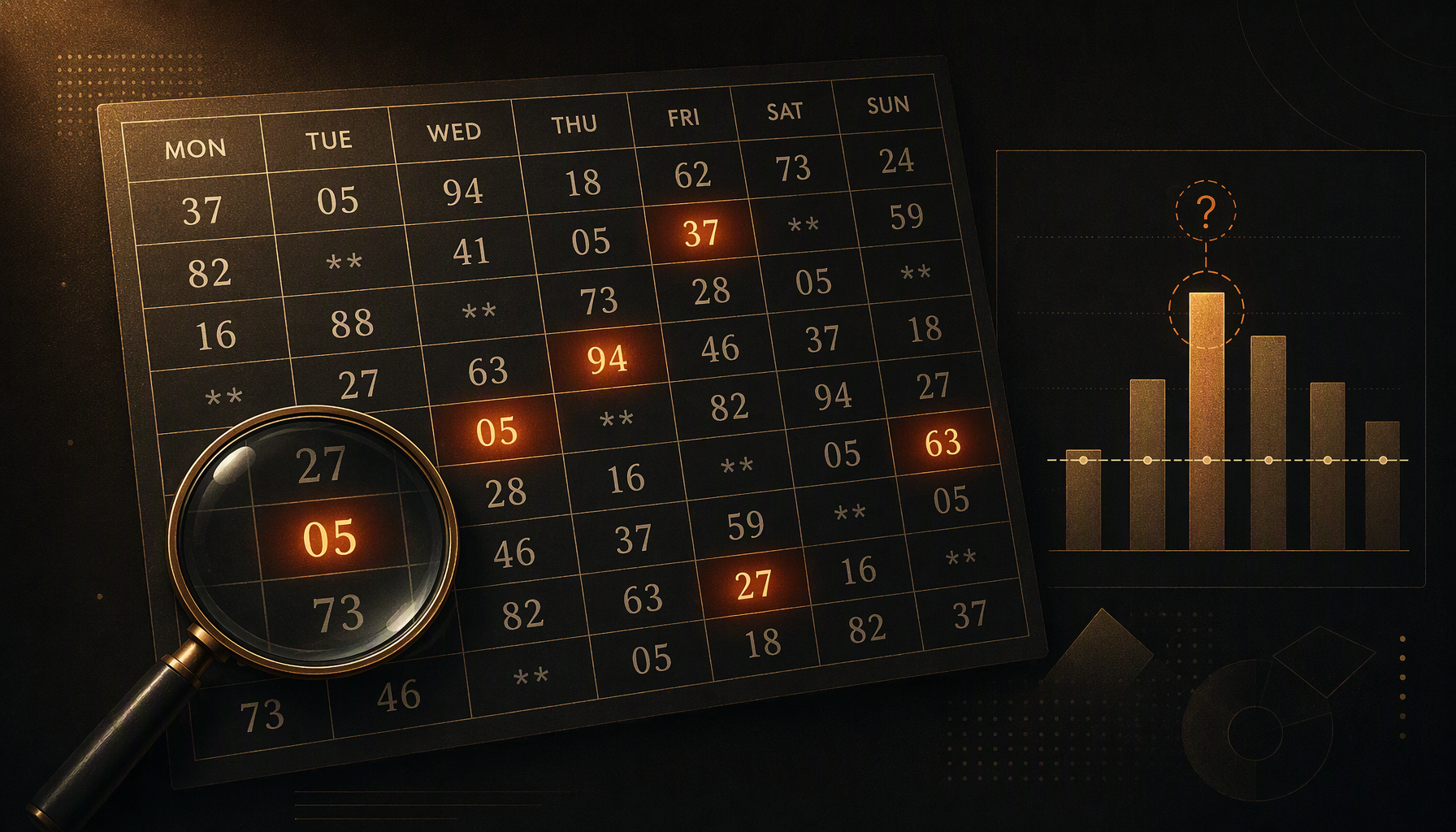
In online wagering discussions, social channels, and messaging groups, static screenshots are routinely circulated as definitive “proof” of extraordinary outcomes. A shared image might display a winning wager ticket, an alleged pre-draw prediction matching the exact declared numbers, or a purported historical chart record. However, in modern computing, a screenshot represents only a collection of rendered pixels stripped of its cryptographic origin, network headers, and chronological context. Without an authenticated source domain and an independently verifiable timestamp, a screenshot proves nothing more than the graphic designer’s ability to manipulate text on a screen.
Just as legal and financial auditors reject unverified printouts without primary source documentation, readers evaluating Matka records must understand the technical limitations of image-based claims. This guide breaks down the core vulnerabilities of static screenshots, explains how post-draw edits and selective cropping manufacture false evidence, and outlines the hierarchy of standards required for genuine verification.
The Four Fatal Vulnerabilities of a Static Screenshot
An image file (.png, .jpg, or .webp) is completely decoupled from the server that generated the original data. This separation introduces four fundamental failure points:
| Vulnerability Type | How Manipulation Occurs | Why Pixels Cannot Detect It |
|---|---|---|
| 1. Client-Side DOM Editing | Using browser Developer Tools or contentEditable to modify text, digits, or balances on a genuine webpage. |
The visual output uses identical fonts, styling, and layouts as the original site, leaving zero graphical artifacts. |
| 2. Post-Draw Message Editing | Sending placeholder numbers before a draw, editing the message text after the result is known, and capturing a screenshot. | Cropping out or hiding “(edited)” labels creates the illusion of an unbroken pre-draw forecast. |
| 3. Sandbox & Demo Accounts | Placing massive wagers on staging, test, or demo environments where play credits carry zero financial risk. | Wager slips generated in demo mode use identical visual UI elements as production cash accounts. |
| 4. Selective Cropping | Removing market names, full date stamps, or preceding failed guesses to present isolated winning events. | Without the surrounding ledger, the viewer cannot determine the true denominator of attempts. |
1. Client-Side DOM Tampering: Modifying Webpages in Seconds
The most common misconception is that a screenshot displaying a recognized website's logo or interface guarantees that the displayed information originated from that platform’s server.
Every modern web browser includes built-in inspection tools designed for software developers. With three keystrokes, anyone can inspect an HTML element:
// Executed locally in any browser console:
document.body.contentEditable = 'true';
This command instantly transforms any webpage into a live text editor. Any number, date, or payout figure can be retyped directly on screen, rendered in the site's authentic typography, and captured as a screenshot.
Because the browser renders the modified text using the site’s own stylesheet (CSS), the resulting screenshot is visually indistinguishable from an authentic page. Crucially, however, this change exists purely in local device memory. The actual database on the server remains untouched. A screenshot captures only the temporary, manipulated state of the local browser viewport.
2. The Chronological Illusion: Post-Draw Editing and System Clock Shifts
When a screenshot is presented to demonstrate that a tipster predicted a result before market cutoff, the critical variable is time. Yet timestamps displayed within images are among the easiest elements to counterfeit.
Post-Publication Edits
Popular messaging platforms permit users to edit sent messages. A common fraudulent practice involves:
- Posting several vague numbers or arbitrary placeholders at 3:30 PM (before a 3:45 PM draw).
- Waiting for the official draw declaration at 3:51 PM.
- Editing the message at 3:53 PM to replace the text with the exact winning Pana and Jodi.
- Immediately taking a screenshot of the message.
While some platforms append an “(edited)” tag, fraudulent operators crop the tag out of the frame or use simple client scripts to hide the tag before capturing the image. To any viewer reviewing the image, the message appears to have been authored at 3:30 PM with 100% predictive accuracy.
Device Clock Manipulation
Mobile operating systems display timestamps in messaging interfaces based on the client device’s internal clock. If a user manually adjusts their smartphone clock backward by four hours, screenshots captured of local message threads or device notifications reflect that altered time. Without independent server-side time synchronization, an on-screen clock provides zero chronological assurance.
3. Context Stripping and the Denominator Fallacy
Even if a screenshot is technically genuine (unaltered pixels from a live account), it frequently deceives through context stripping.
A screenshot showing an isolated winning bet of ₹50,000 conceals the underlying denominator:
- Did the bettor place twenty separate ₹5,000 wagers across different numbers that day, losing ₹100,000 to win ₹50,000?
- Were the previous thirty days of consistent losses cropped out of the balance history?
- Which specific market was being wagered on? Removing the market banner allows a win from a secondary, low-stakes starline session to be presented as a major Kalyan victory.
As established in our verification framework for what an accuracy claim must show, an isolated success metric without an audited denominator is mathematically uninformative.
The Hierarchy of Evidence: From Pixels to Cryptographic Proof
To evaluate whether a result declaration or prediction claim is authentic, analysts use an evidence hierarchy ranging from easily fabricated media to tamper-proof cryptographic ledgers:
| Trust Level | Format | Authenticity Assessment | Vulnerabilities |
|---|---|---|---|
| Level 1 (Unverified) |
Static Screenshots & Cropped Images | Zero evidentiary weight. Trivially manipulated via DOM tools, photo editors, or mockups. | No origin server, no headers, no unalterable timestamps. |
| Level 2 (Low Confidence) |
Screen Recordings & Videos | Moderate visual appeal, but still vulnerable to client-side manipulation. | Can record a session from a modified DOM or local web proxy that returns mock JSON data. |
| Level 3 (Verified Domain) |
Live Public URL on Authenticated Domain | High reliability. Accessible live via HTTPS with a verified TLS certificate on an established portal. | Requires confirming the exact browser address bar to guard against phishing or typosquatting domains. |
| Level 4 (Tamper-Proof) |
Cryptographically Committed Ledgers | Gold standard. SHA-256 hash or digital signature published prior to cutoff on an immutable public ledger. | Mathematically impossible to alter retroactively or backfit after draw occurrence. |
What to Check Before Believing Any Result Image
When confronted with an image alleging an extraordinary result or winning slip, apply four practical verification tests:
- Demand the Live Domain URL: Does the claim link directly to an active, canonical URL on a recognized portal (such as the Sara777 Charts Directory), or does it exist solely as an isolated image file?
- Cross-Reference Independent Historical Archives: Compare the claimed numbers against third-party archives and full panel records, as detailed in our guide on what a full Pana record preserves. If the numbers differ or do not appear in established ledgers, the screenshot is fabricated.
- Audit the Full Ledger Sequence: Reject isolated winning slips that fail to document previous transactions. Check whether dates are missing from the broader historical series using the principles in how missing dates distort frequency counts.
- Inspect the Three Temporal Markers: Verify whether the claim accounts for Result Time, Page Update Time, and Archive Date alignment, as analyzed in our breakdown of why result timestamps differ.
Conclusion
A digital image is not documentation; it is merely an illustration. In an era where anyone can edit web elements locally in seconds, relying on screenshots to verify draw results or validate forecasting claims is an invitation to deception. Reliable record-keeping demands continuous, publicly audited web archives that preserve unalterable server timestamps, full panel combinations, and verifiable chronological histories.